Overview
SALIK is a wide-ranging initiative of the UP CMC Department of Communication Research aimed at establishing a facility that will become the focal point for communication and media research in the Philippines. The ultimate goal of this Hub is to advance the teaching and practice of communication and media scholarship in the country, hence the appellation Hub for Excellence in Communication and Media Research in the Philippines.
Conceptual Framework
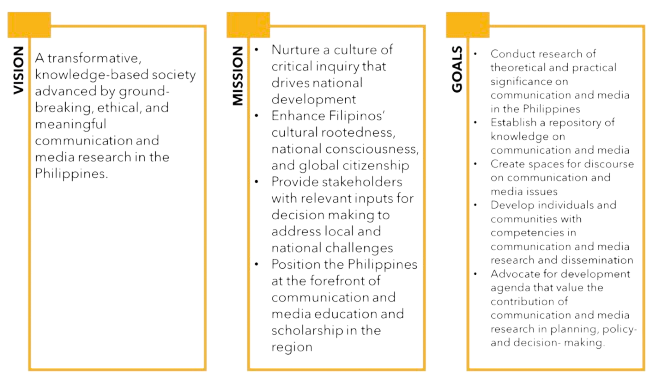
SALIK’s conceptual blueprint, which defines its organizational direction and purpose, is articulated in its vision, mission and goals, concretized in its components, and charted in its stages of institutionalization.
Components
In SALIK, research serves as the pivot around which all the hub’s components are designed. There are three core components of SALIK, one each for research production, research dissemination, and research competence-building. These components and their corresponding sobriquet are, respectively, the research laboratories (SURI), the digital repository of research reports (HANAY), and the publication and continuing education program (SANAY).
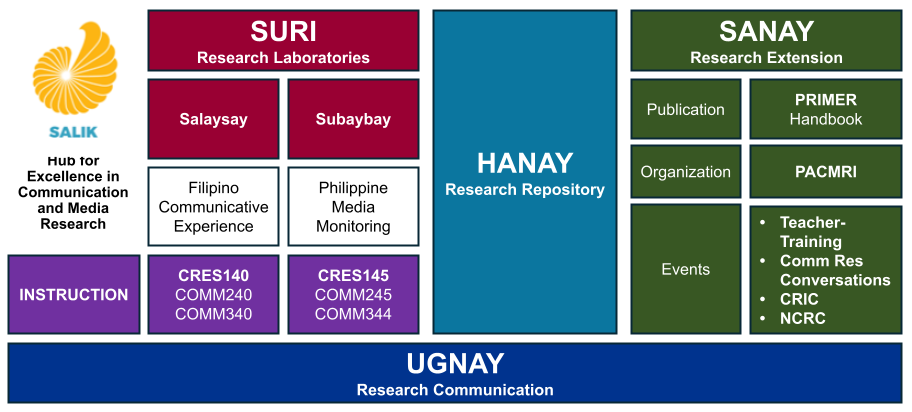
SURI, the flagship component of SALIK, refers to the research laboratories that are envisioned to spearhead knowledge production on communication and media phenomena in the country. There are two core laboratories, which correspond to the two major streams of inquiry that encapsulate the breadth and depth of the Philippine communication and media landscape. These research laboratories are:
a. The Filipino Communicative Experience (FCX) Laboratory, named SALAYSAY, which
focuses on studies that aim to decipher the enigma of Filipinos as communicators:
how they create, transmit, receive, negotiate, and construct messages within and through the ever-transforming communication and media environments.
FCX Faculty Members:
-Prof. Jonalou Labor, PhD
-Czekaina Esrah Rapanot
-Asst. Prof. Renz Roc, PhD
-Prof. Randy Solis, PhD
-Asst. Prof. Irish Talusan, MA
-Assoc. Prof. Aurora Liwag-Lomibao, PhD
-Asst. Prof. Michelle Sto. Tomas, PhD
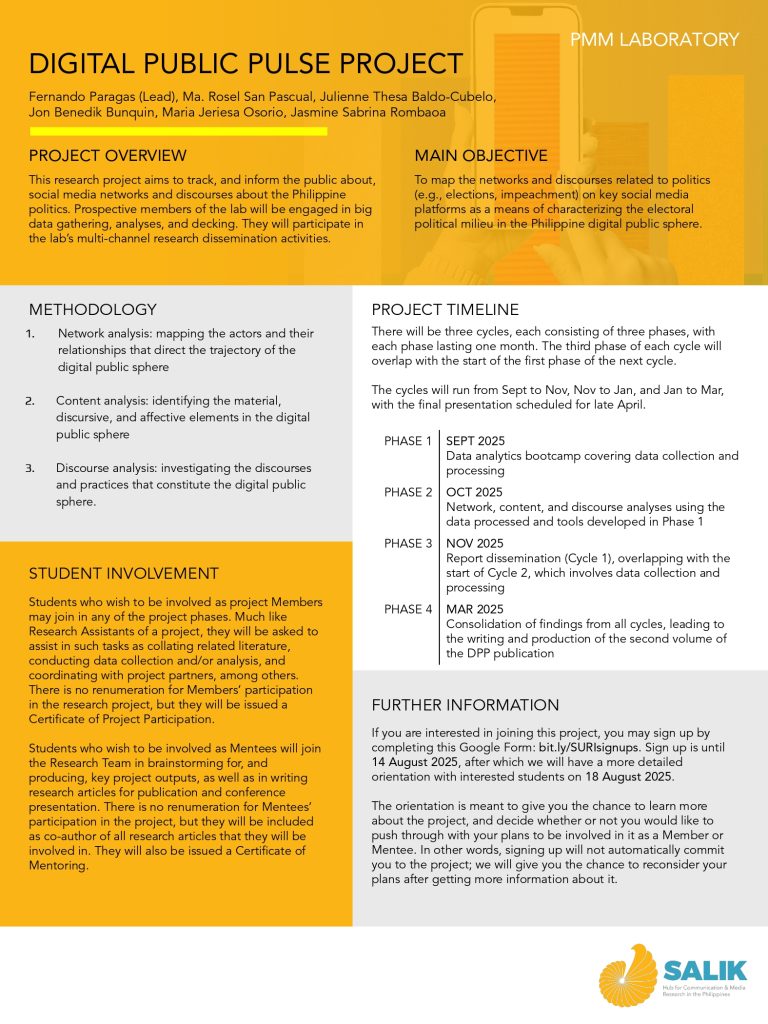
b. The Philippine Media Monitoring (PMM) Laboratory, or SUBAYBAY, which concentrates on research that examines the principles, procedures, and practices behind media content creation and production, as well as studies that interrogate the public’s reception of, and engagement with, media content.
PMM Faculty Members:
-Asst. Prof. Benedict Bunquin, PhD
-Prof. Julienne Baldo-Cubelo, PhD
-Asst. Prof. Ma. Jeriesa Osorio, MA
-Prof. Fernando Paragas, PhD
-Asst. Prof. Jasmine Rambaoa, MA
-Prof. Ma. Rosel San Pascual, PhD
HANAY, or the digital repository, is a curated collection of scholarly research on Philippine communication and media. As a disciplinary repository, HANAY aims to (a) showcase communication and media research in the Philippines, (b) serve as a resource for scholars interested in communication and media research in the Philippines, and (c) provide a space for collaboration among scholars interested in Philippine communication and media.
HANAY is an open-access repository and upholds the principle of open access as defined by the Budapest Open Access Initiative (BOAI). Moreover, HANAY abides by relevant intellectual property laws in the Philippines, which are primarily the Intellectual Property Code of the Philippines (RA 8293) and the Technology Transfer Act of 2009 (RA 10055).
The full-blown repository is envisioned to include various resources on Philippine communication and media such as peer-reviewed journal articles, theses and dissertations, papers presented in academic conferences and proceedings of academic conferences, books or book chapters, research reports and lectures, research-based policy briefs, and datasets. HANAY endeavors to include less accessible scholarly works on Philippine communication and media, i.e., those that are not available online and filed only in local libraries.
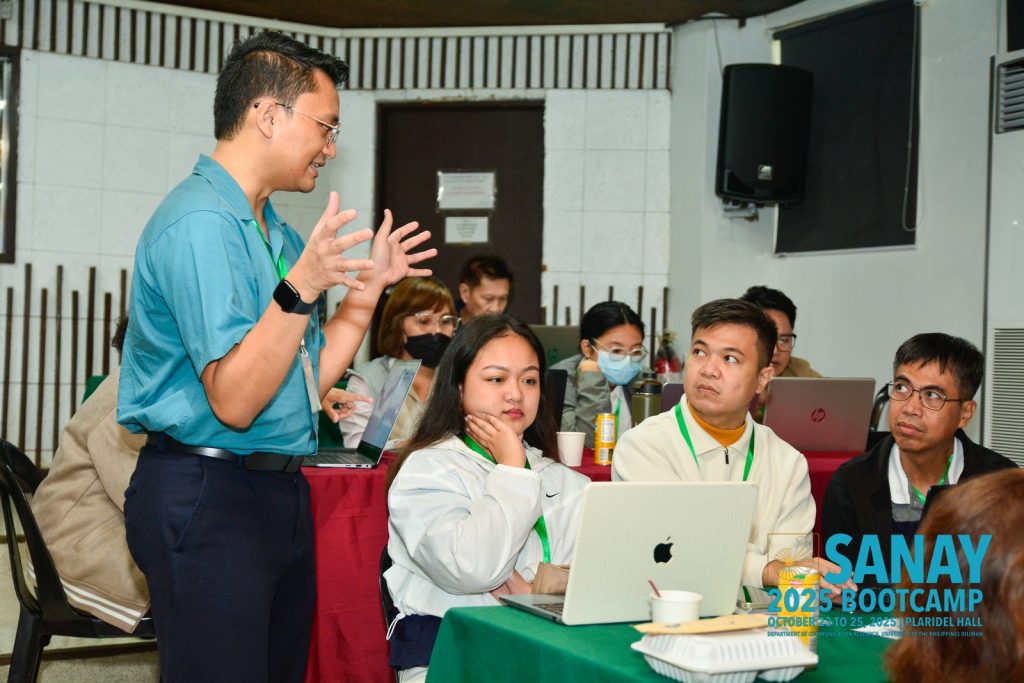
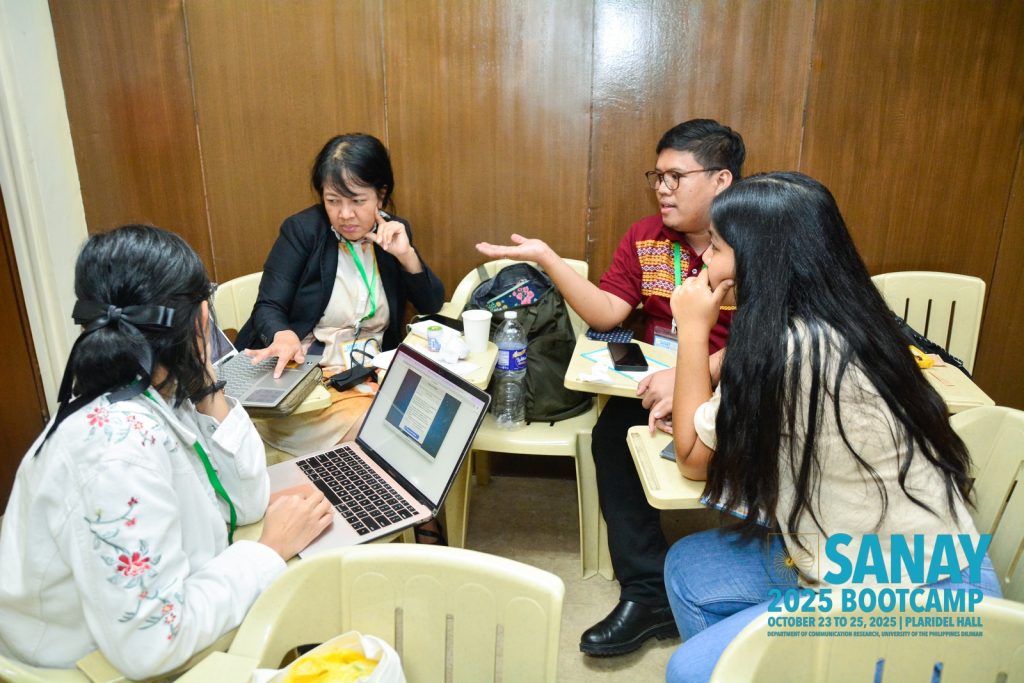
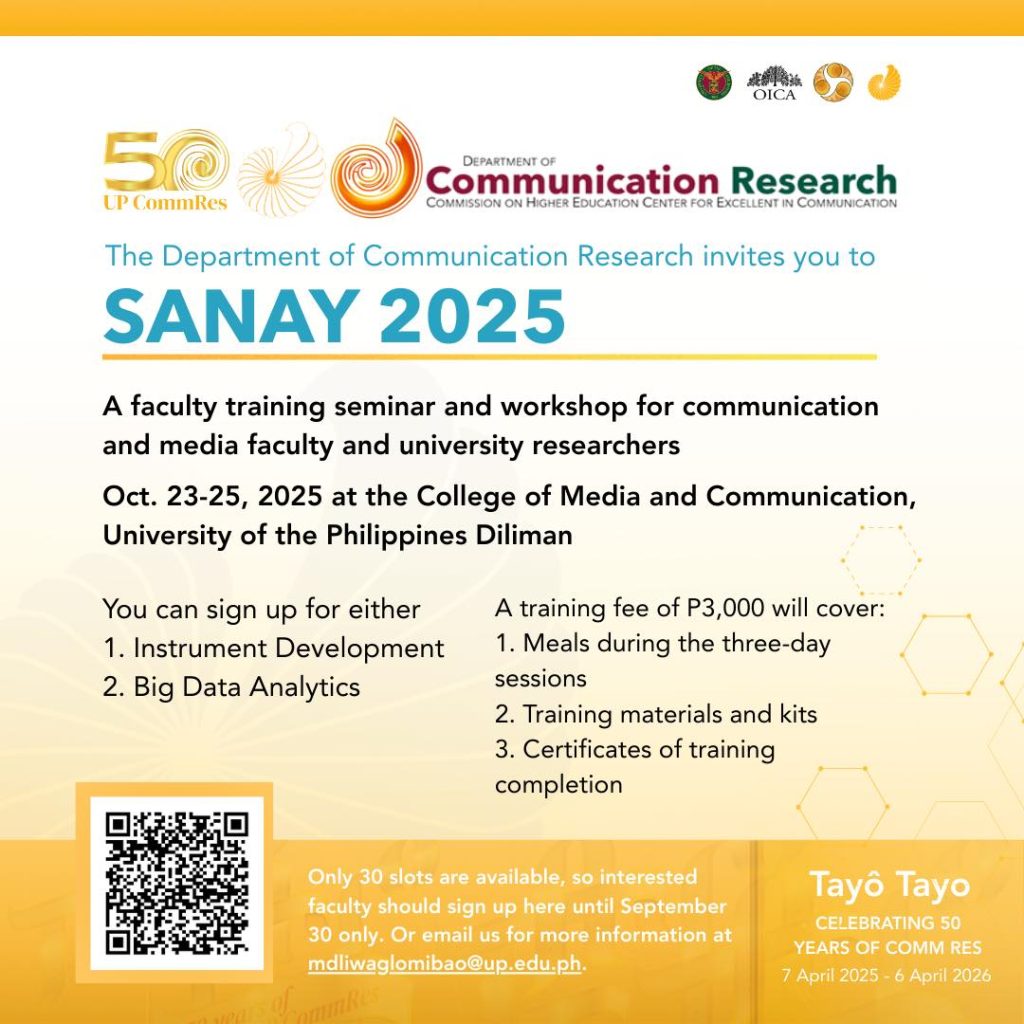
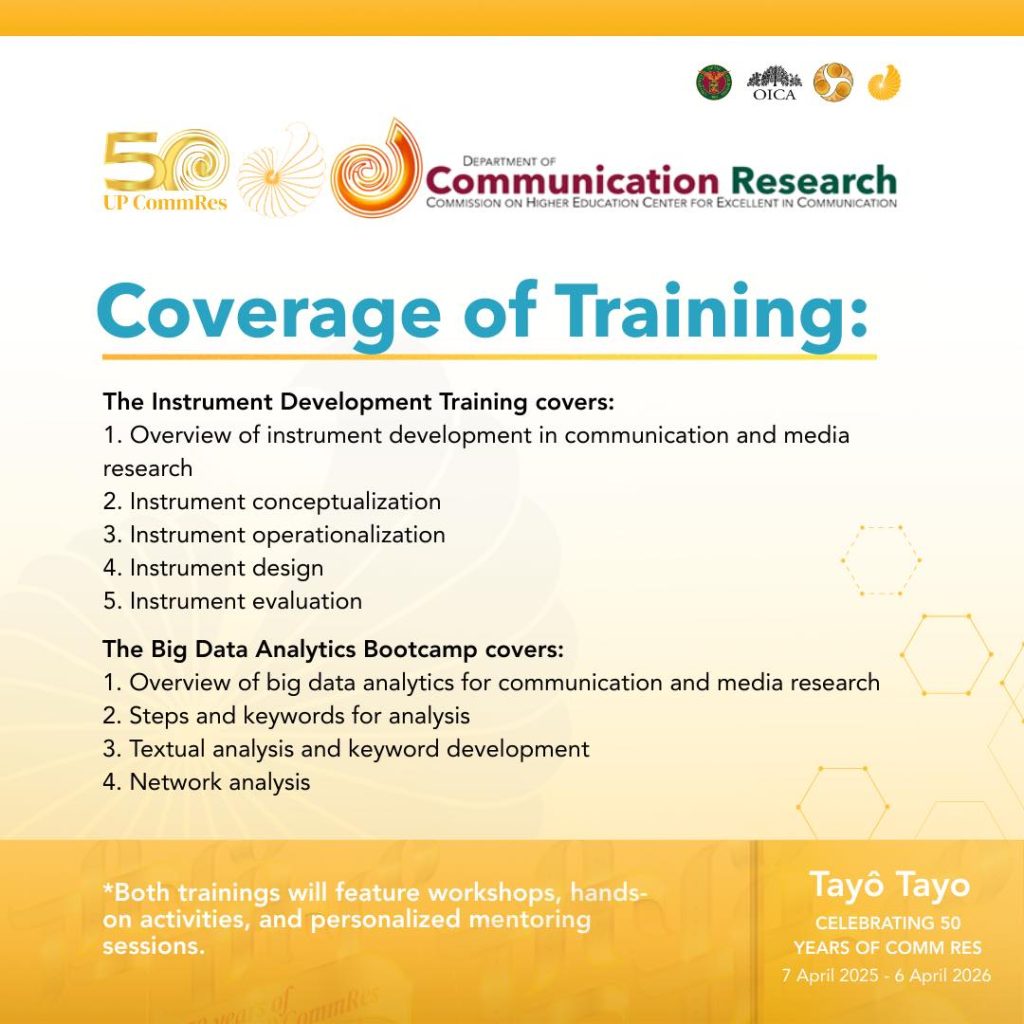
SANAY is the component that links most directly with SALIK’s goal of strengthening communication and media research education in the country. There are two programs under SANAY: Publication and Continuing Education.
a. The Publication Program aims to address the lack of reference materials that could be used for teaching communication and media research in tertiary education institutions in the country. Most of the research textbooks and reference materials currently available are Western publications that, while useful for the theoretical and procedural aspects of research, understandably lack the local context that would make them more relatable to Filipino students.
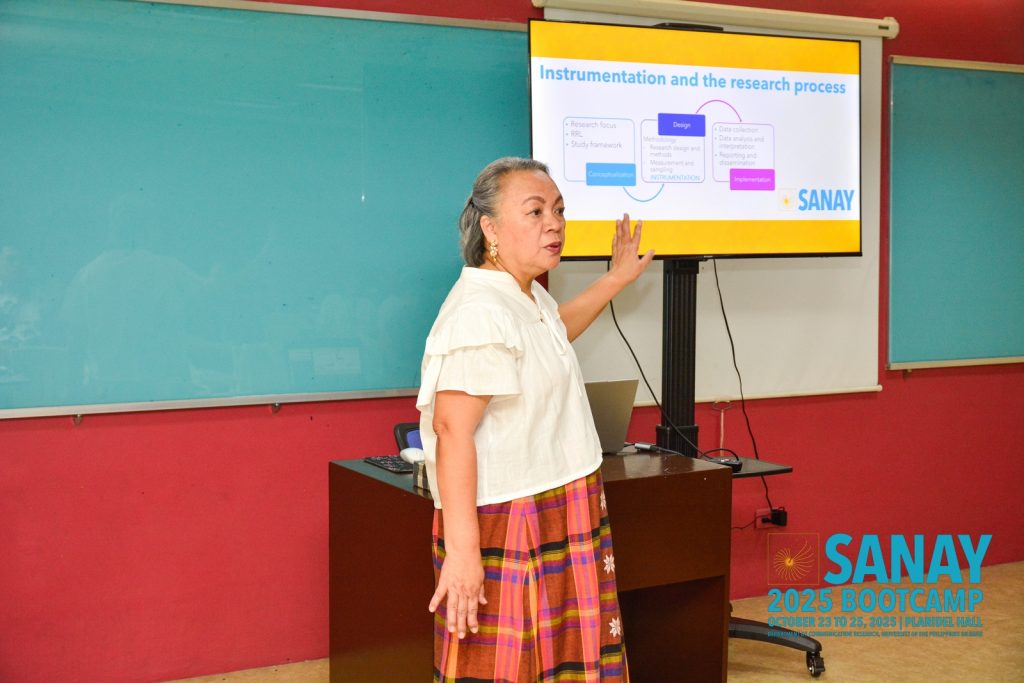
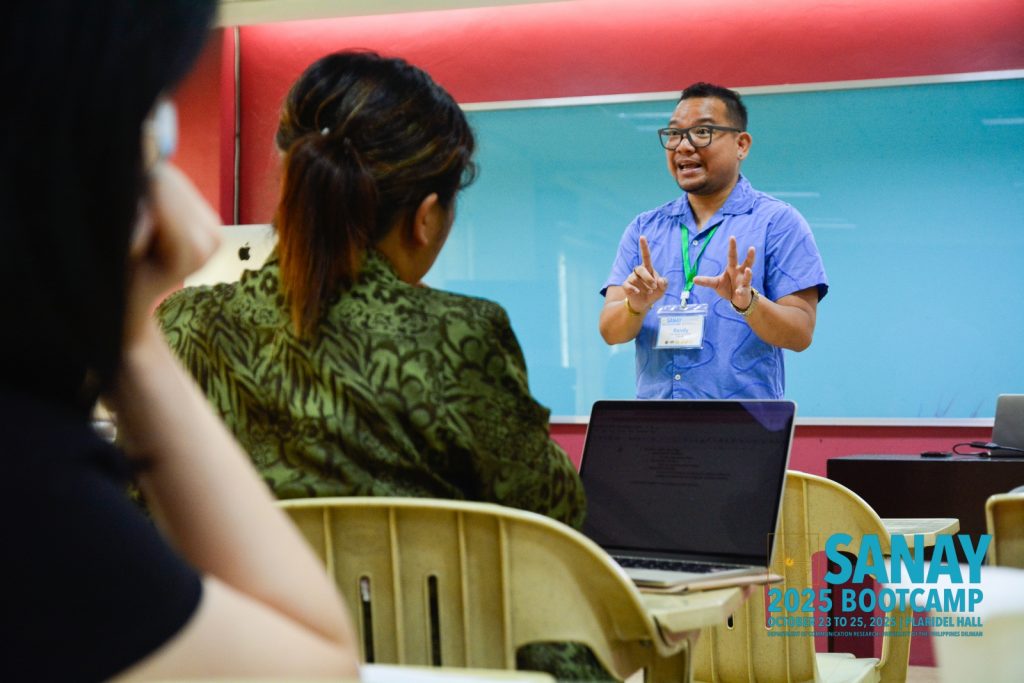
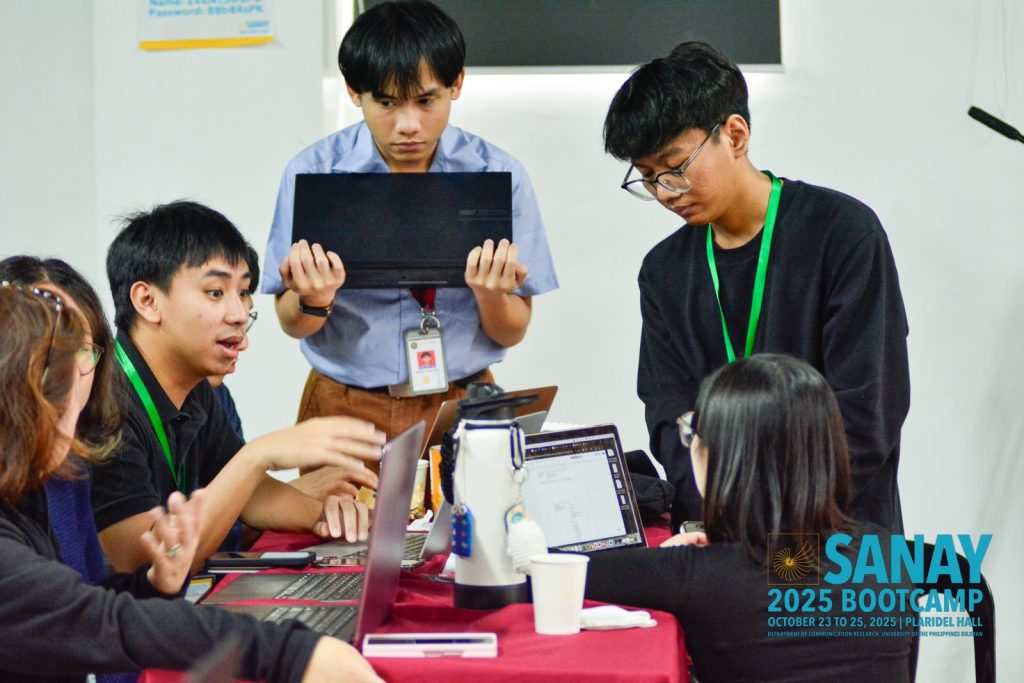
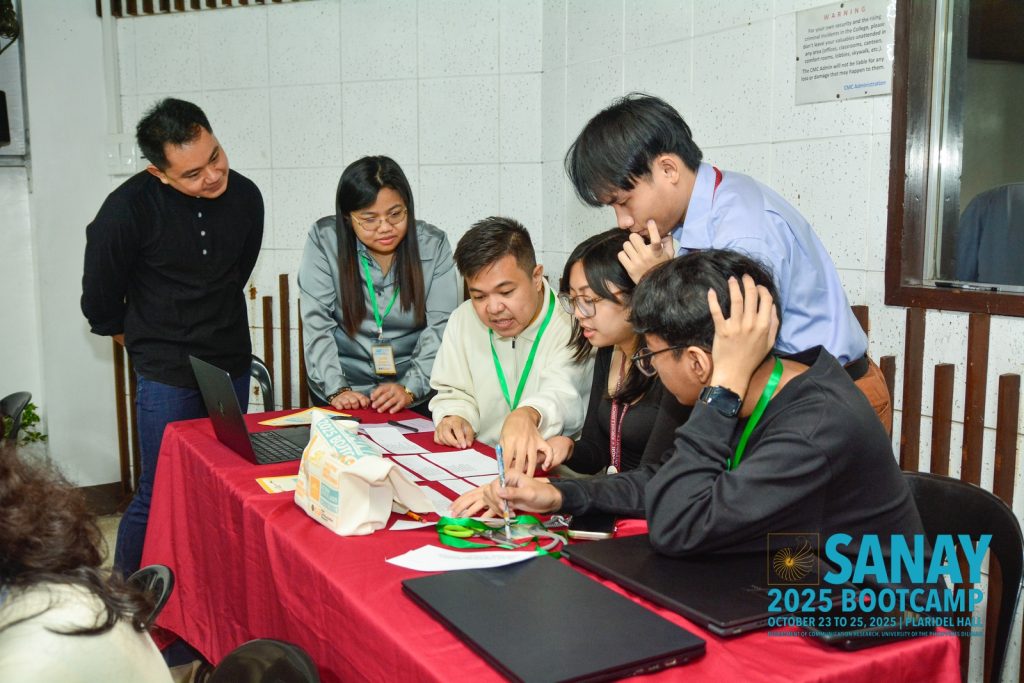
b. The Continuing Education Program will cater mainly to teachers of communication and media research in tertiary education, and will offer lectures, seminars, training programs, and short courses on research principles, procedures, and pedagogy.